I hold the product vision and keep the build honest for non-technical founders in Middle Tennessee. I build it myself, or I help you assemble and run the team that does.
What I do: I am a senior engineer and engineering leader who helps non-technical founders get an app built right, or fix one that is not working. I make the technical calls, hold the product vision, and either build the product myself or find, hire, and run the team that does.
You get one person accountable for the outcome, who can read the code and explain it to you in plain English.
Most struggling apps are not a code problem.
They are a missing-owner problem. A developer who disappeared, or who nobody on your side can tell is good or bad. A scope that grew without anyone deciding it should. A prototype that proved the idea and was never meant to carry real users.
I have spent my career on both sides of that problem: running development for other people's products, and now leading engineering at a fintech company. I also still ship my own software, which is the combination that lets me tell the difference between a team that is slow and a team that is stuck.
That gap has gotten wider over the past year. AI tools make it fast to prove an idea works and do nothing to make sure it survives real users, real scale, or a real customer's scrutiny. Founders show up with a working prototype and no plan for what comes after it. Others show up with an app that mostly works and a developer they no longer trust. Both are the same problem at a different stage.
Fit
Who this is for
A good fit
Non-technical founders with an app idea who want it built by someone accountable
Owners whose app is buggy, slow, late, or was abandoned by its developer
Founders with an AI-built or no-code prototype who need a real plan to production
Founders deciding whether to rebuild or repair
Businesses that need a development team built, hired, and managed, without managing developers they cannot evaluate
Anyone who needs the honest version rather than the diplomatic one
Not a fit
You want a second opinion that confirms a decision already made
You are shopping for the lowest hourly rate
You need penetration testing or SOC 2 readiness — I will refer you
You need a full-time CTO and are hoping a part-time lead will cover it
I will tell you this on the first call rather than after you have paid.
Engagements
Four ways to work together
Fixed scope, fixed price, written deliverable for every starting point. You know what you are getting and what it costs before anything starts.
Not sure which fits?
Start with a free 30-minute call
Tell me about your app, your idea, or your developer situation. I will tell you which of these, if any, makes sense — and if none does, who to talk to instead.
For an app that already exists and is not behaving. I review the code, the infrastructure, and how the work gets delivered, then tell you plainly whether to repair, rebuild, or leave it alone, and what each costs.
A time-boxed sprint to stop the bleeding: fix what is breaking, secure what is exposed, and leave the app in a state a team can safely build on. Scoped from the audit, so there are no surprises on price. The audit fee is credited toward it.
Scope Set by the auditFormat Fixed-length sprintOutcome Stable, documented app
Prototype to Production
Starting at$3,500
For founders with an idea or a working prototype — AI-generated, no-code, or self-built. I tell you what is salvageable and what to build, then either build it myself or help you hire and manage the team that will.
Timeline 1 week for the planDeliverable Build plan + team briefBuild Quoted separately
Product & Build Lead
Starting at$5,000/mo
I run the build on your behalf. I hold the product vision, keep scope honest, review the work as it ships, and stand between you and a development team you have no way to evaluate. I can also help you hire that team.
Commitment MonthlyNotice 30 days, either wayCadence Weekly working session
Also available: independent technical due diligence for investors and boards, from $7,500. Ask about it.
For local businesses: website accessibility checks and fixes, with a free first report. See how it works.
Method
How I audit an app
Every audit runs the same five passes in the same order, because the later ones only make sense once the earlier ones are answered. Nothing here is proprietary. If you want to run it yourself, run it.
Architecture & scale
What breaks first at ten times current load, what the cost curve looks like as you get there, and which technical decisions are genuinely irreversible versus cheap to change later. Most founders spend their anxiety on the second list.
Delivery health
Whether the test suite catches anything real, not what the coverage number says. Deploy frequency, rollback capability, and how long it takes an idea to reach a customer.
Team capabilityThe one nobody else answers
Who actually ships. Where the bus factor is one. Whether progress is limited by people, process, or architecture — three problems that look identical from the outside and have nothing in common as fixes. And the question underneath all of it: can this team deliver what it has already promised you?
Roadmap coherence
Whether what is being built matches what your customers actually need. What is under construction that should not be. What is missing that your users consider table stakes.
Risk register
Security posture, key-person exposure, vendor lock-in, cost trajectory, and compliance gaps. Each one ranked by severity with an honest estimate of what it costs to fix, so you can decide what to ignore on purpose.
Service area
Based in Middle Tennessee
I live and work in the Nashville area, and for this kind of work that matters more than it sounds like it should.
The third lens — team capability — is the one that decides most engagements, and it is the one you cannot assess over video. Developers tell you different things sitting across a table than they do on a call with their client's name in the participant list. When I can sit down with you and your team, the work is materially better. That is the strongest argument for hiring someone local rather than a stranger on a marketplace.
The same goes for hiring advice. If I am helping you build a development team, knowing what senior engineers in this market actually cost, where they come from, and who they will take a call from is worth more than a national benchmark report.
That said, roughly half of audit work is code review and remote conversations. If you are outside the region and the engagement suits it, the work travels fine.
On-site, no travel charge
Nashville · Franklin · Brentwood · Cool Springs · Berry Hill · Green Hills · Spring Hill · Murfreesboro · Hendersonville · Mount Juliet · Columbia
Director of Software EngineeringDash Solutions · four years, lead to manager to director
FounderSmall development agency · ran development for client products
Co-founderTwin Sun · software development agency (stake since sold)
Sole builderJuxtah · iOS app, Node backend, App Store release
I co-founded Twin Sun, a software development agency, and led development teams there building products for other companies. I have since sold my stake. After that I ran a small agency of my own for a handful of clients. For the past four years I have been at Dash Solutions, a fintech company, where I moved from lead to manager to Director of Software Engineering. Day to day I help our teams communicate and deliver, and I still dive into mobile and web app development and review our endpoints and security.
I am also the sole builder of Juxtah, an iOS proximity-alert app — architecture, backend, mobile client, and App Store release, all of it. That matters here for one specific reason.
I still ship. That is unusual for someone who leads engineering teams, and it is why I can tell the difference between a team that is slow and a team that is stuck.
Most people who can still read a codebase have never had to answer to a business for a missed deadline. Most people who lead teams stopped writing software years ago, and it shows in what they miss. The work I do sits in between.
I am not a CTO and I do not sell myself as one. I am the person who holds the product vision, makes sure the build is honest, and either builds it with you or helps you find and run the people who will.
What I have shipped
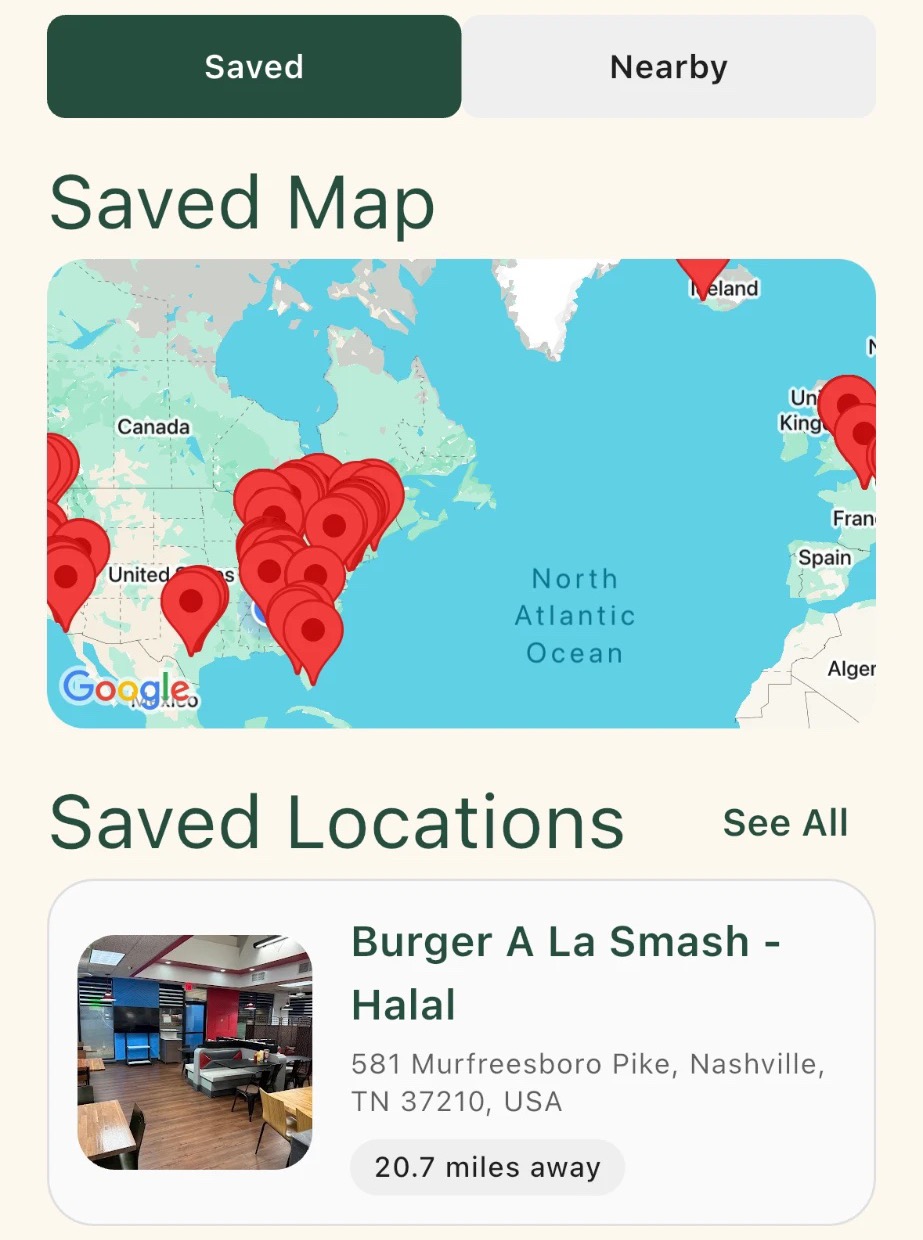
Juxtah — an iOS app that alerts you when you are near places you have saved. Built solo, end to end: a Flutter client, a Node.js backend, background location handling on iOS, and a pipeline that pulls places out of shared social-media links. Taken from first line of code to App Store release.
It is early, so I will not quote numbers I do not have. It is the honest answer to “have you actually built and released one of these?” — and I am glad to walk you through it on a call.
Juxtah, home screen
Questions
Frequently asked
My developer disappeared or my app is a mess. What do I do?
Get an independent read on what you actually have before you spend more money on it.
Do not hire a second developer to "take a look" until you know whether the problem is the code, the process, or the person. The App Health Audit answers that in one to two weeks: what is broken, what is only ugly, what is a security risk, and whether to repair, rebuild, or leave it alone, with a cost estimate for each.
How much does it cost to build an app?
It depends on the app, and I will give you a real number before you commit to building anything.
Planning starts at $3,500 and takes about a week. You get a build plan, a scoped feature list, and a quote for the build itself. Anyone who quotes you a build price on the first call, with no plan behind it, is guessing.
What do I actually get from an App Health Audit?
A written report plus a 60-minute readout, in language you can act on without being technical.
The report opens with a plain-English summary, then ranked findings coded by severity, then a recommendation to repair, rebuild, or leave alone, with an honest cost for each. Fixed price, $3,500 to $5,000 depending on the size of the app, quoted before work begins.
Should I rebuild my app or repair it?
Usually repair first, and the answer is rarely the one either side of the argument expects.
Rebuilds are frequently proposed to solve delivery problems that are actually team or process problems, and a rebuild will not fix those. It will restart them on a new stack. Establishing which of the three you are looking at is exactly what the audit is for.
I used AI to build a prototype. What do I do now?
Get an honest assessment before you spend more money building on top of it.
Tools like Lovable, Bubble, and v0 are excellent at proving an idea works. They are not built to become the software a paying customer or an investor will trust. The question that matters is not whether the prototype works today. It is how much of it survives real users, real scale, and real security requirements, and what finding that out costs.
Can you build my app for me?
Yes. Focused products I build myself. Larger ones I lead.
For a well-scoped product, I build directly. For larger builds, I scope the work, help you hire or source the team, and stay on as the technical lead running it, so you are never managing developers you have no way to evaluate. I led development teams at Twin Sun, a software agency I co-founded, and I still ship my own software.
Can you help me build a team instead of hiring an agency?
Yes. I can define the roles, help you hire, and run the team for you.
Whether an agency, freelancers, or in-house developers is right depends on your budget and how long the product needs to live. I will tell you which situation you are in. The real risk is not finding developers. It is evaluating whether the ones you hired are any good.
What does a Product & Build Lead do?
I run the build on your behalf, so you do not need to become technical to get a good result.
I hold the product vision, keep scope from drifting, review the work as it ships, and translate between you and the developers. It sits between hiring an agency and hiring a full-time CTO. It is the right fit when you have, or are about to have, people who can build but nobody on your side who can judge the work.
Do you work with companies outside Nashville?
Yes. About half of audit work is code review and remote conversations, so engagements travel well.
On-site work in Nashville, Franklin, Brentwood, and the surrounding Middle Tennessee area carries no travel charge. For clients elsewhere in the United States, I quote travel separately or run the engagement fully remote, whichever suits the situation.
Will my current developers know they are being reviewed?
Yes, and they should. A hidden review produces worse information.
I state my attribution rule at the start of every conversation and I honor it. Developers will not tell you the truth if they believe it gets a colleague fired, and the truth is the entire product. Before an engagement starts, we agree in writing on who reads the report and whether findings are attributed to named people.
Do you still do technical due diligence for investors?
Yes, as a secondary service, from $7,500.
It is a two-week assessment across the same five lenses, written for a board or an investment committee, with a 90-day plan. If you are an investor or board member, ask on a call and I will scope it.
Next step
Start with a call.
Thirty minutes, free, no deck, no pitch. Tell me about your app, your idea, or your developer situation, and I will tell you whether I am the right person to help — and if I am not, who is.